
You spent serious money on the website. The design is clean. The UX is solid. The photos are stunning. And then someone reads the hero headline and it says: “Empowering Businesses to Achieve Sustainable Growth Through Innovative Solutions.”
Your visitor closed the tab. You just paid to lose them.
Copywriting Is Not Filler
In most brand projects, copy is treated as the thing that happens after the real work is done. The design is approved, the layout is locked, and then someone, often not a copywriter, fills in the text boxes with something that “sounds professional.”
The result is websites full of words that say nothing. Service pages that describe what you do without explaining why it matters. About pages that sound like a LinkedIn summary written by a compliance officer.
This is catastrophic in industries with sophisticated buyers. A CMO at a UAE-based wellness startup, a CEO evaluating a new SaaS platform, a real estate investor researching a developer, these people can smell generic copy from a mile away. And when they smell it, they leave.
The Most Common Copy Crimes
Starting with “We” instead of “You.” Your customer doesn’t care about you. They care about their problem. Lead with their world, not yours.
Using jargon as a substitute for clarity. “Disruptive,” “ecosystem,” “holistic approach,” “end-to-end solutions” — these phrases have been drained of meaning by overuse. Replace them with specifics.
Listing features instead of benefits. Nobody cares that your platform has “real-time data synchronization.” They care that their team stops wasting 3 hours a week reconciling spreadsheets.
Writing for your internal voice instead of your customer’s. If your team uses acronyms and industry terminology daily, those words will bleed into your copy. They shouldn’t.
What Good Copy Actually Does
Good website copy does three things simultaneously: it qualifies visitors (making clear who this is and isn’t for), it communicates value without padding (saying the important thing without four sentences of preamble), and it creates momentum (making the next action feel obvious and low-risk).
For a brand operating across multiple markets — the UAE, Saudi, Spain, the US — copy also has to carry cultural intelligence. The tone that lands in Dubai doesn’t always translate directly to an American market, and vice versa. That’s not a translation problem. It’s a positioning problem.
The Rewrite Test
Take your current homepage headline. Read it out loud. Now ask: would a real human being ever say this in a conversation? If the answer is no, rewrite it until it sounds like something a sharp, senior person at your company would actually say to a prospect over coffee.
Copy that sounds human converts. Copy that sounds like a brochure doesn’t.
Words Are Brand
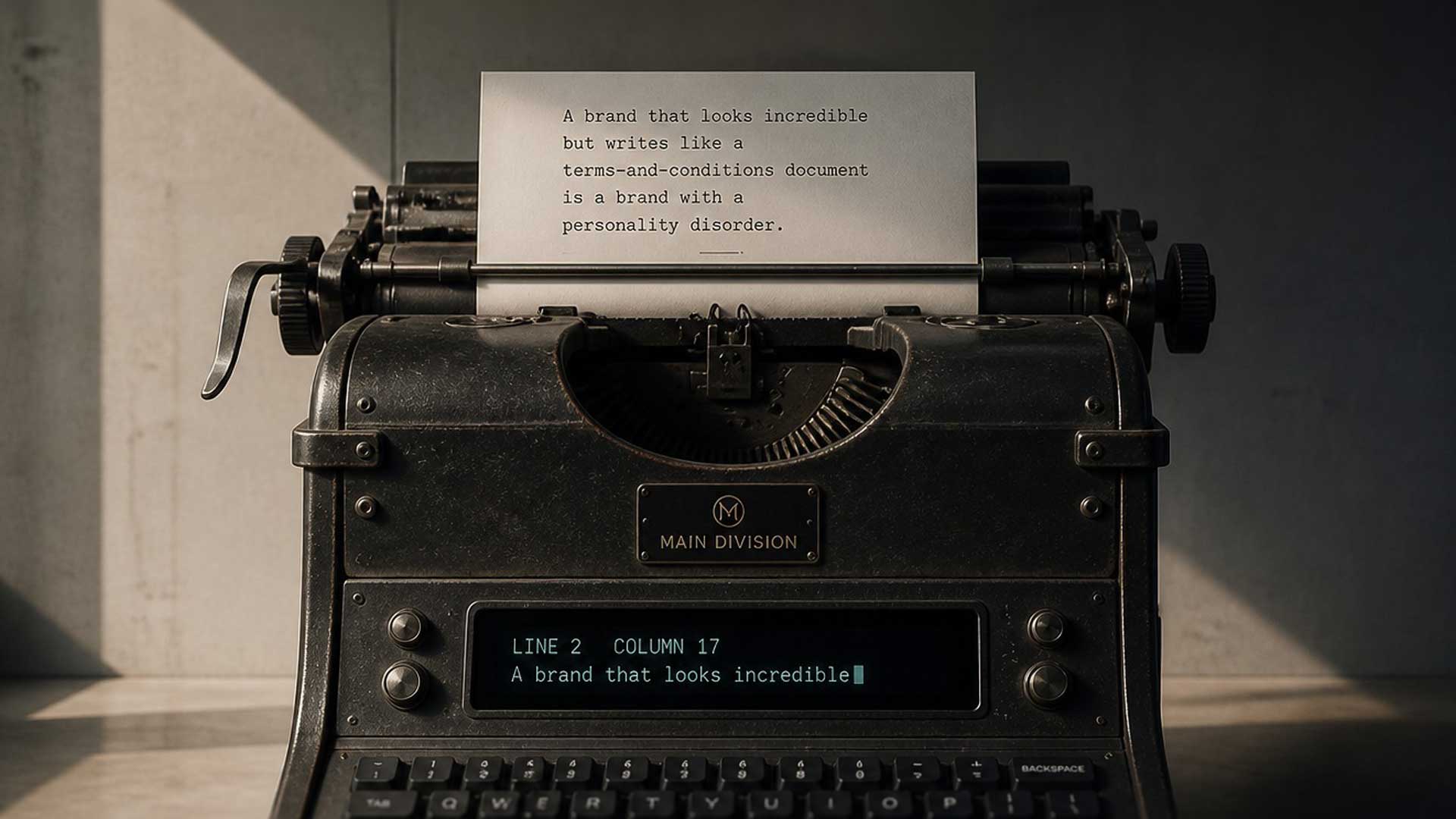
Visual identity and copywriting aren’t separate disciplines. They’re two sides of the same coin. A brand that looks incredible but writes like a terms-and-conditions document has a personality disorder. The words your brand uses, their rhythm, their specificity, and their confidence are as much a part of your identity as your logo.
Get the words right. Everything else gets easier.